
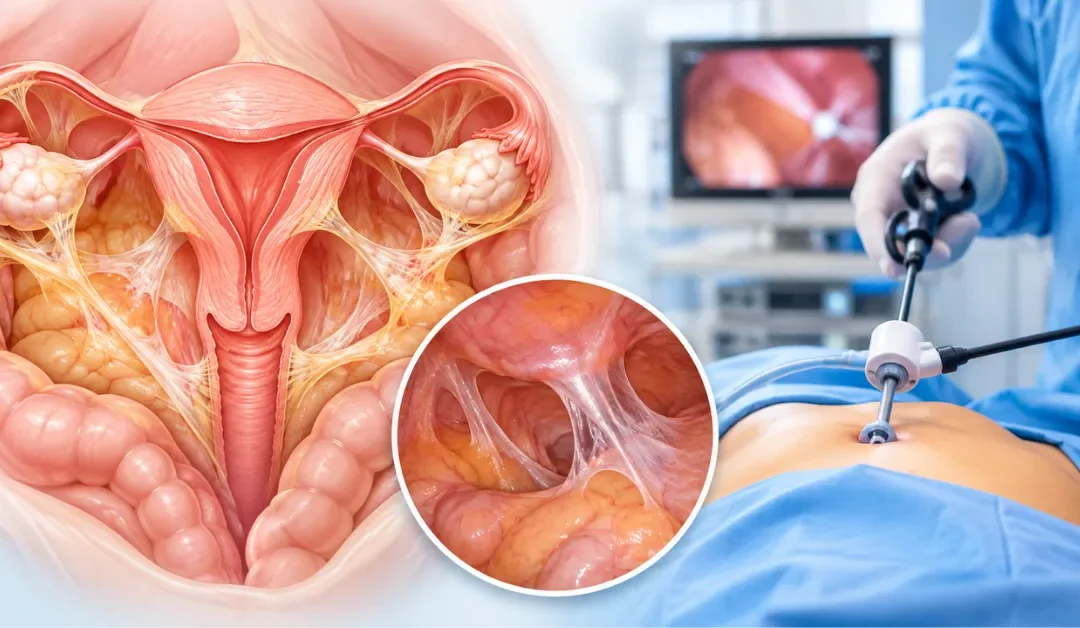
Imagine tissues in your abdomen that are supposed to slide over each other, rather than stick to each other. That sticking is what causes the pulling, dragging pain that a lot of women describe after surgery or infection.
What are Adhesions?
Adhesions are bands of scar tissue that form between organs such as the uterus, ovaries, tubes, and bowels. They can be thin as a film or thick and dense.
Why They Evolve
- Previous abdominal or pelvic surgery including Cesarean Section
- Endometriosis
- Infections of the Pelvis
- Ruptured appendix or inflammatory bowel disease
Side effects of radiotherapy
Most adhesions are benign. When they do, women notice.
- Chronic pelvic pain that changes with movements or postures
- Pain during intercourse
- Difficulty in conception if the tubes or ovaries are involved.
- Bloating, constipation, or, rarely, bowel obstruction Diagnosis
Adhesions are not seen clearly on standard scans. They are suspected by doctors from history and confirmed by camera examination through small cuts in the abdomen.
Management
Painkillers and physiotherapy help temporarily but do not remove bands. The definitive treatment is keyhole surgery to cut the adhesions, called adhesiolysis. It releases the organs; eases pain and can restore fertility.
Seeking Care
Indore has many women who come for treatment of pelvic adhesions, and they need to find a gynecologist in Indore who has handled complicated pelvic cases and who discusses the chances of the bands coming back.
If surgery is recommended, ask about pelvic adhesion surgery in Indore from a center that uses modern laparoscopic equipment and careful techniques to reduce new scarring.
Adhesion is common and manageable. Early assessment can prevent months of unexplained pain.