
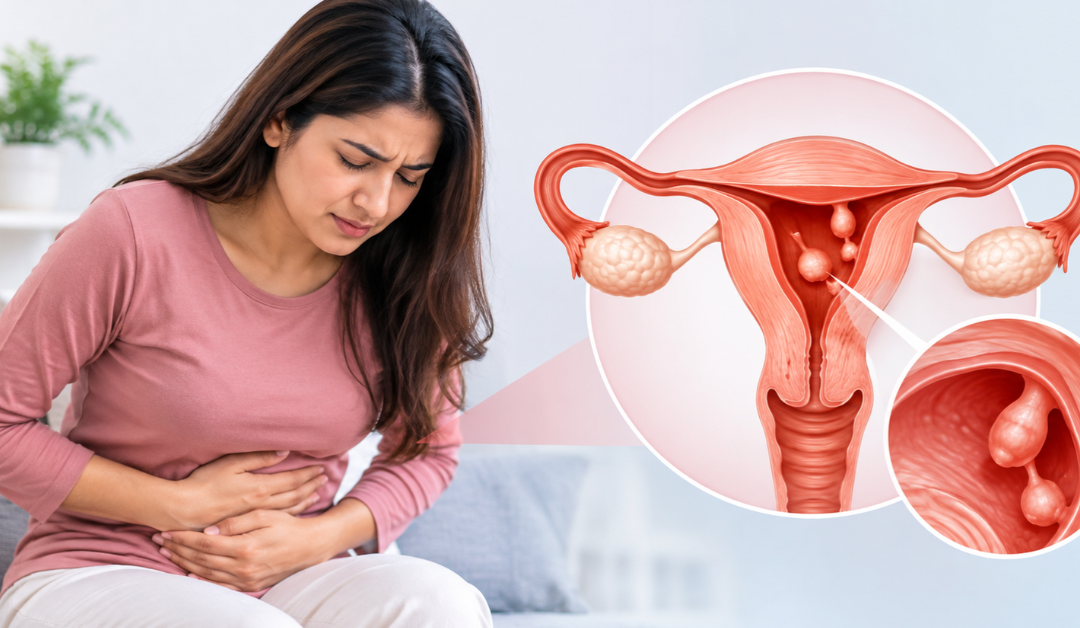
Bleeding between periods or after menopause can be worrying. The cause is usually harmless, but it should never be ignored. One of the more common and treatable causes is a small growth within the uterus.
What is a Polyp of the Uterus?
Polyp is soft growth attached to the inner wall of the uterus. It is when the lining grows out of control in one area. Polyps can be the size of a seed or a lemon, and a woman can have one or several.
Symptoms to Look Out For
- Bleeding between periods
- Heavy periods or irregular periods
- Postmenopausal bleeding
- Bleeding following intercourse
- Trouble getting pregnant
Many polyps are found during routine scans and cause no symptoms.
Who is more likely to have them?
Polyps are more common in women between the ages of forty and fifty. High levels of estrogen, obesity, high blood pressure, and some medications for breast cancer can increase the chance.
How Doctors Identify Them
Usually, the first step is a transvaginal ultrasound.” We can do a saline-assisted scan for a better view of the cavity. The most accurate way is to use a small camera to look inside the uterus, which also allows for treatment at the same visit.
Treatment Options
Small asymptomatic polyps may be observed. Medications can stop the bleeding temporarily but will not get rid of the growth. The only definitive treatment is surgical removal, and the sample is sent to the lab to confirm its benignity.
For treatment of uterine polyp in Indore, select a center which has imaging and day-care surgery, so that diagnosis and removal can be done without long delays.
If you have unexplained bleeding, then you should visit a uterine polyp specialist in Indore and understand if the growth needs removal. Polyps rarely become cancerous, but it’s best to get them checked out.