
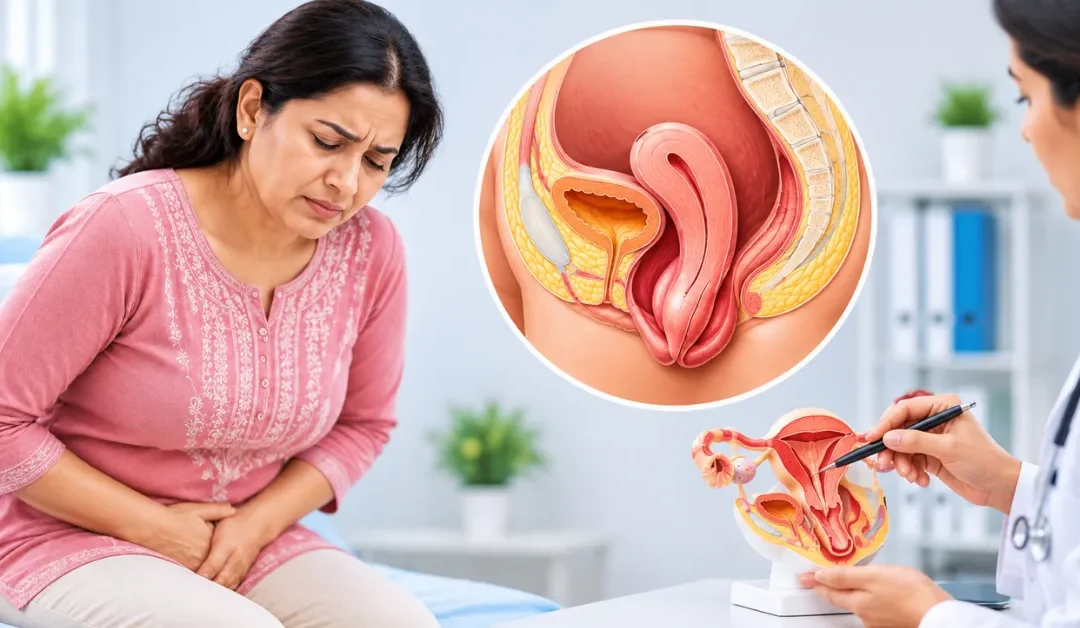
Some women feel pressure in the pelvis when they are standing or lifting, and others see tissue at the vaginal opening when they are bathing. Both are signs that the uterus is not at its normal position.
Degrees of Prolapse
Doctors say fall is on stage. In the beginning, the uterus drops a little into the vagina. At advanced stages the cervix reaches the opening and in the most severe form the whole uterus lies outside the body.
Signs and symptoms
- A feeling of fullness or dragging ach
- A lump you can see or feel
- Backache that improves with lying down
- Urgency, leaking, or difficulty emptying the bladder
Sores or bleeding from rubbing if tissue bulges out When surgery is not needed
Mild prolapse without bothersome symptoms usually responds to exercises to strengthen the pelvic floor, weight loss and avoidance of heavy lifting. A ring pessary is a dependable choice for women who cannot or do not want surgery.
When Surgery Is Necessary
Symptoms interfere with daily life
- A pessary doesn’t stay in place or irritates
- The prolapse is severe
- There is difficulty passing urine or stool
- The woman wants a permanent fix.
Type of Operations
Some women have a hysterectomy and repair of the vaginal walls at the same time. Others, particularly those who wish to retain the uterus, can have it lifted back and fixed to strong ligaments, often by keyhole surgery. This depends on your age, health, and wishes.
Healing
Generally, the hospital stay is two to three days. For about six weeks you should avoid lifting heavy weights and straining and keep your stools soft to protect the repair.
Getting Help
If you are looking for treatment for uterine prolapse Indore, start with an exam that grades the prolapse and checks your bladder function.
If surgery is needed, ask about the type of surgery for uterine prolapse in Indore, the method, recovery time, and risk of recurrence. Good counseling makes the decision much easier.