
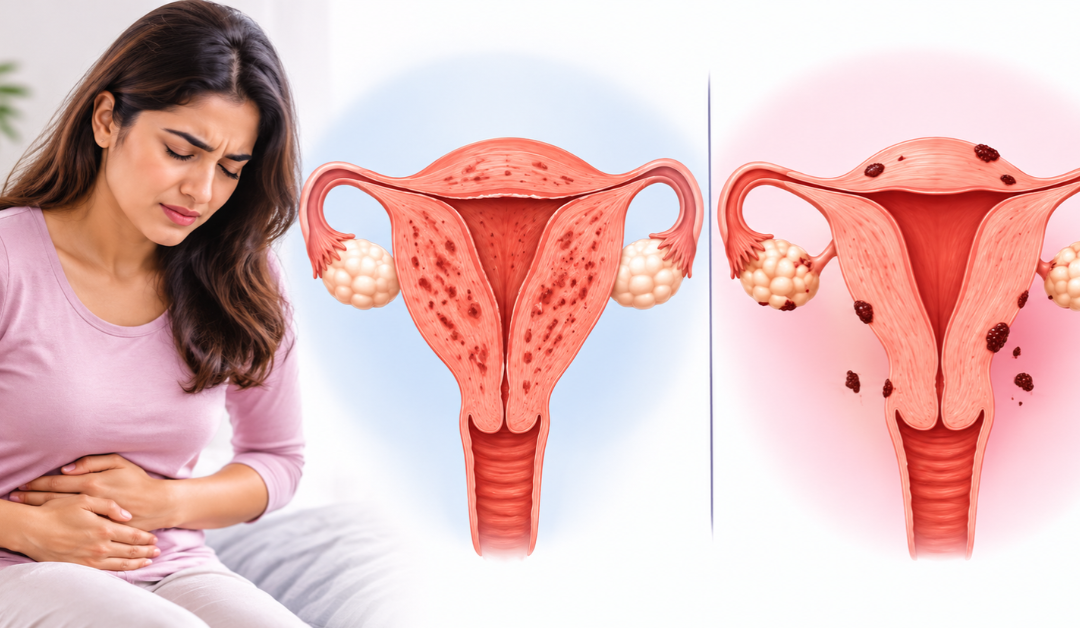
Both conditions cause painful periods, pelvic pain, and worry. The symptoms overlap so much that women are often told they have one when they have the other, or sometimes both.
What Makes the Core Different
The simplest way to distinguish them is by location. In adenomyosis, tissue that is like the lining grows in the muscle of the uterus. In endometriosis, similar tissue grows outside the uterus on the ovaries, fallopian tubes, bowels, or pelvic wall.
Where the symptoms differ
- Feature Adenomyosis Endometriosis
- Heavy periods Very common side effect.
- Pain pattern Enlarged uterus with cramping
- Deep pelvic pain, sometimes pain in the bowel or bladder
- Typical age 35-50 20-40
- Effect on fertility Often a big concern
How Confusion Is Made
Both can cause pain during sex, fatigue and cycles that feel unbearable. Or they may both appear at once. Only imaging and sometimes a laparoscopic examination can clearly differentiate them.
How They’re Diagnosed
Ultrasound or MRI will demonstrate ovarian cysts or changes in the uterine wall. A keyhole procedure allows the doctor to see the deposits and take a small piece if endometriosis is suspected.
Differences in Treatment
Both are treated with medicines, but the surgery is different. With endometriosis, removal of deposits and cysts is often required. Adenomyosis may require treatment of the uterine wall itself. Fertility plans play a big part in the decision.
Finding the Right Opinion
If you are comparing adenomyosis vs endometriosis, remember that the right answer lies in your own scans and history and not in a general list of symptoms.
If you already suspect the second condition, you can investigate endometriosis treatment in Indore, which ranges from hormonal therapy to laparoscopic surgery. A diagnosis is the first step to lasting relief.