
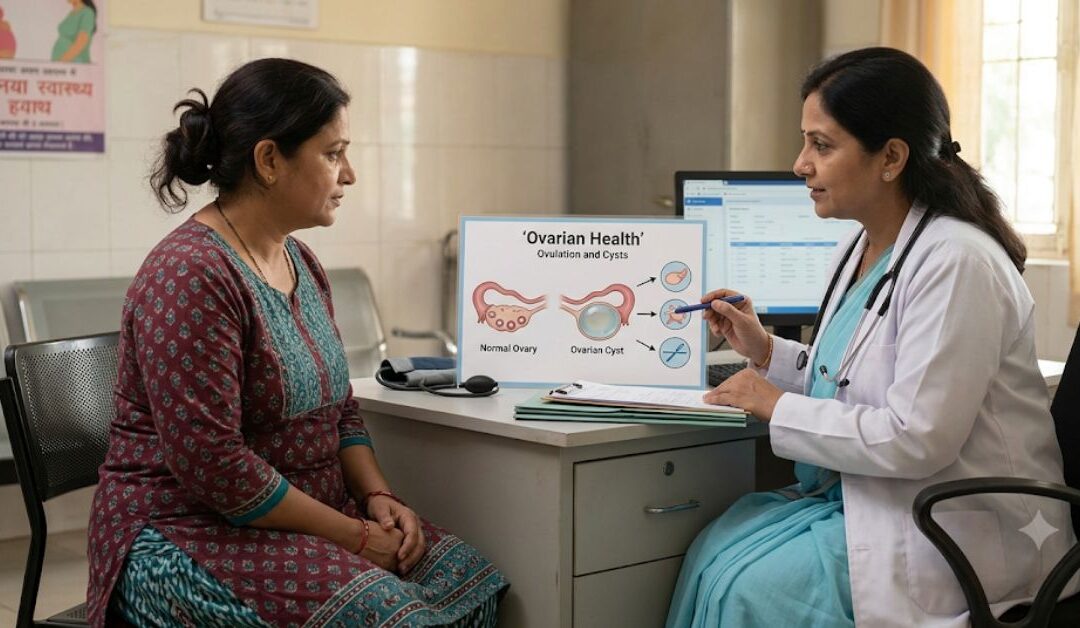
Hearing the word “cyst” on an ultrasound report can be frightening, but most ovarian cysts are benign. They are fluid-filled sacs that develop on or in an ovary. Many go away on their own without treatment.
Common types
Functional cysts are the most common type and develop as part of the normal cycle of the menstrual cycle. Other types include dermoid cysts, endometriomas from endometriosis, and cystadenomas. They each behave differently. That is why a good diagnosis is important.
Symptoms to watch for
There is nothing for many women. A dull ache in the lower abdomen, bloating, pain during periods or intercourse, a feeling of fullness or frequent urination are some of the symptoms. If you have severe pain suddenly, with nausea or fever, you need to see a doctor urgently, as this could be a sign of the cyst twisting or rupturing.
When is treatment needed?
Doctors usually look at a few factors:
- Size of cyst, especially if over about five centimeters
- Persistence for more than a few menstrual cycles
- Persistent pain or pressure
- Abnormal ultrasound appearance
- Menopause – new cysts require more careful examination
- Effect on fertility
Small, painless functional cysts are often simply observed with a repeat scan in 6 to 8 weeks.
If your symptoms continue or the cyst keeps on growing, consulting a doctor for ovarian cyst treatment in Indore helps you understand whether medicines, monitoring or surgery is the right path. In some cases, hormonal medication can be used but does not dissolve all kinds of cysts.
Diagnosis
The main test is an ultrasound of the pelvis. If the cyst looks complex, blood tests including tumor markers in selected cases or an MRI may be recommended.
Living with an ovarian cyst
Keep a diary of your symptoms, have follow-up scans, and don’t ignore sudden changes in pain. A healthy lifestyle can help keep your hormones balanced overall, but it can’t guarantee that cysts won’t develop.
Do not panic
Most cysts are benign. Early review leads to better outcomes. But don’t self-medicate or rely solely on home remedies if symptoms continue.
If you have a cyst diagnosis or suspect, an experienced ovarian cyst specialist in Indore can interpret your reports, tell you your risk level, and recommend a plan that protects both your health and your future fertility.