
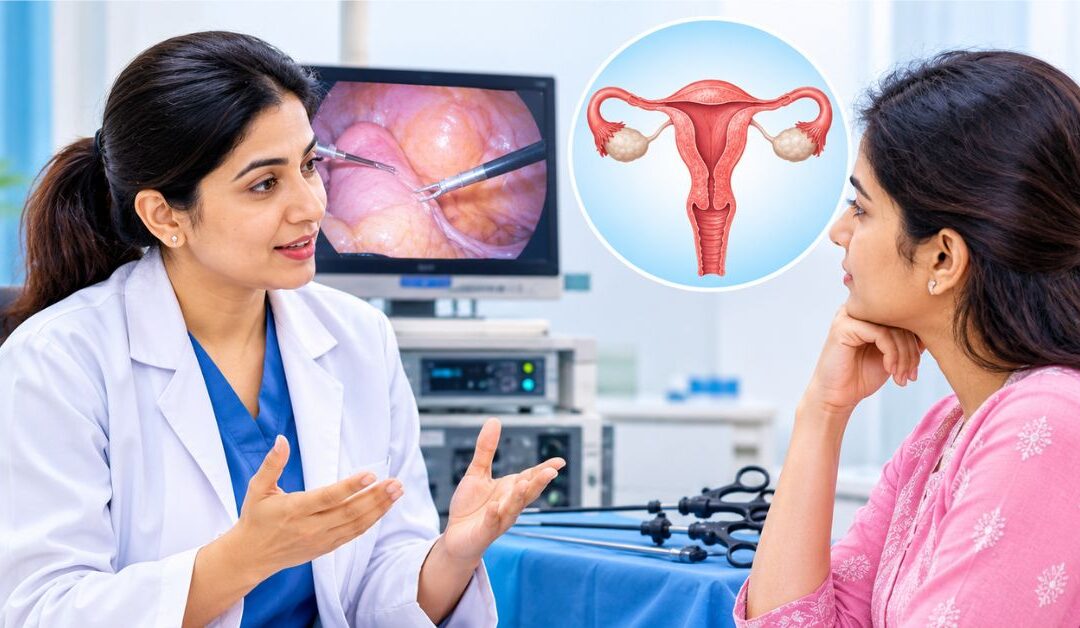
Hearing the word “surgery” makes most women feel uneasy. Fibroids, ovarian cysts, heavy periods and longstanding pelvic pain are common problems, and sometimes the tablets just aren’t enough. When surgery is the next step, the technique used is nearly as important as the diagnosis itself.
Laparoscopy is also known as keyhole surgery. The surgeon makes a few very small incisions, usually half a centimeter to one centimeter long, and inserts a thin camera and delicate instruments through these incisions. This generally means less pain, smaller scars, a shorter hospital stay, and a quicker return to daily routine than with a traditional open operation. When a scan report shows a cyst, fibroid, or adhesions, many patients start looking for a laparoscopic gynecologist in Indore.
This is a good approach to discuss in a number of situations. They include ovarian cysts that keep growing, fibroids that cause heavy bleeding, endometriosis, a tubal pregnancy, scar tissue from previous surgery, and pelvic pain that tests can’t explain. Also used to look inside the pelvis when a couple has been trying to conceive without success. In selected cases even removal of uterus can be done in this way.
That said, not every problem requires an operation. Some cysts go away on their own and some fibroids just need to be monitored. A good doctor will tell you straight if waiting or medication is the best way to go.
If surgery is advised, ask some practical questions. How many similar surgeries has the surgeon performed? What else is there to do? Is it possible that the surgery will have to be converted to an open surgery and under what conditions? 4. You will be far more comfortable if you pick a gynecologist for laparoscopy in Indore who answers these clearly and works in a hospital with good anesthesia and emergency backup.
Preparation is usually simple – a few blood tests, an ultrasound and fasting for a few hours before the procedure. Most women go home in a day or two and are encouraged to get out for a walk early on. Some shoulder discomfort from the gas used to inflate you during surgery is normal and resolves quickly.
Whatever you choose, don’t put off a consultation if symptoms are impacting your life. An early discussion often facilitates treatment.